
Career shifts succeed when they are shared, understood, and prepared for together — not when they are carried alone. The first real alignment happens at home, long before a business plan, a website, or a client conversation ever takes shape.
You can present a business case to a board.
You can explain your expertise to clients.
You can justify your decisions to yourself.
But the transition into your next professional chapter becomes real when the person who shares your life understands why this shift matters now — and what it means for both of you.
This newsletter is about that person — your quiet co-founder in the background — and how to bring them into the journey with clarity, confidence, and respect.
Why this moment feels different at 50+
Reaching this stage of your career is not a crisis — it’s an inflection point.
You’ve built competence, reputation, and resilience.
You understand organizations deeply.
You know what creates results — and what drains energy.
Yet something else is happening around you:
- Change cycles are shorter
- Strategic priorities evolve faster than leadership hierarchies can
- Customer expectations shift more rapidly
- Teams are asked to deliver more with less
- Global work rhythms no longer pause
- Digital pace compresses reflection time
None of this is wrong.
It’s simply different from the world in which your career started.
What once felt stimulating now feels repetitive.
Roles that once defined you now feel transactional.
Your contribution is valued — but not always aligned with what gives you meaning today.
This is not dissatisfaction.
It’s evolution.
Your experience is telling you something:
There is more you can do with what you know, just not in the same format anymore.
Your spouse senses that shift before you put words to it.
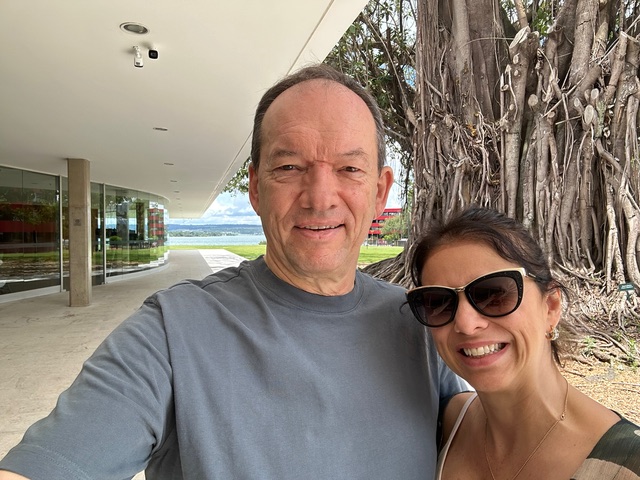
Your spouse isn't a companion. They are your first Co-Founder
Not legally.
Not operationally.
But emotionally and practically.
They live with:
- your travel rhythms
- your availability at home
- the energy you bring back from work
- the moments your work gives you purpose — and the moments it takes it away
They understand not the role you have, but the toll it takes.
So when you consider building something of your own — consulting, advisory work, interim leadership, or a portfolio career — it’s not just a business decision.
It’s a shared life decision.
The three Conversations you can't skip
Career shifts at 50+ don’t need more ambition.
They need more alignment.
1. The emotional conversation – Why now?
Talk about what is calling you forward:
- the desire to shape your own agenda
- the wish to use your expertise with more autonomy
- the feeling that your best years are not behind you, but finally accessible
This is not a rejection of your past.
It’s a recalibration of your future.
2. The financial conversation – What is safe enough?
Replace assumptions with clarity:
- How long can we navigate fluctuating income?
- What buffers exist — and what adjustments feel acceptable?
- What signals show we are on track?
The goal isn’t certainty.
It’s shared confidence.
3. The practical conversation – How will life look?
This is where transitions become real:
- Where will you work?
- How do we protect personal time?
- Which responsibilities shift temporarily?
- What support do you need — and what support is realistic?
These are logistics with emotional consequences.
Handled well, they turn anxiety into partnership.
Unspoken questions your spouse may carry
Not fears — responsible reflections:
- Will this bring more freedom or simply a different kind of pressure?
- How will we measure progress, not just activity?
- What happens if the plan changes?
- How do we stay connected while everything evolves?
These are not obstacles.
They are invitations to maturity.
The upside of shared alignment
When your spouse understands the journey:
✔ You choose opportunities that match your life, not your old identity
✔ You act intentionally, not reactively
✔ You build a business that reflects who you are now
✔ You create a chapter defined by meaning, not maintenance
At 50+, this shift is not about leaving something behind. It’s about stepping into what your experience now makes possible.
A Simple ritual to stay connected
Once a month: Co-Founder Evening
Five short elements:
- One word for how each of you feels
- What worked well
- What was challenging
- What we want to adjust next
- One appreciation
It’s not management.
It’s maintenance, of the relationship that holds everything else together.
Final thought
The most important decision at this stage isn’t: “Should I change?”
It’s: “How do we build this change together?”
Your spouse doesn’t need guarantees.
They need clarity, involvement, and a voice.
Because your next chapter isn’t just a professional evolution.
It’s a shared endeavor and your true co-founder is already by your side.
Don't forget: your excuses are someone else's opportunities.

Responses