
Late Wednesday afternoon. Desk cluttered. Coffee lukewarm. My cursor blinked at the top of a new document like it was daring me to type.
I’d blocked the hour to “work on the business.” I’d opened six tabs: one for market sizing, one for an old McKinsey deck, one for logo color options. You know — the essentials.
I didn’t write the message.
I didn’t call the prospect.
I didn’t ship the offer I’d been “finalizing” for a weeks.
I just sat there, thinking. A lot.
About what to say. About how it might land. About whether it was too soon, too rough, too ambitious, too… something.
At some point, I stood up, closed the laptop, and told myself I’d made progress. I hadn’t. I’d just been looping.

Executives? We're even better at it.
The average person spends 47% of their waking hours in mental reruns — reliving old decisions, worrying about future ones, rehearsing conversations that never happen.
Executives? We’re even better at it.
Years of preparation, risk analysis, scenario planning. It served us in corporate. But out here, it’s quicksand.
We mistake thought for traction.
What begins as strategy becomes a hiding place.
Why the Usual Approach Fails
When we’re stressed, the mind narrows.
Everything feels bigger, heavier, harder to start.
So we wait. We plan. We polish.
But planning too early is just procrastination in a suit.
It’s activity dressed up as progress.
You tweak the offer deck.
You “research” your niche.
You adjust your headline one more time.
And yet, the only metric that changes is your confidence — in the wrong direction.
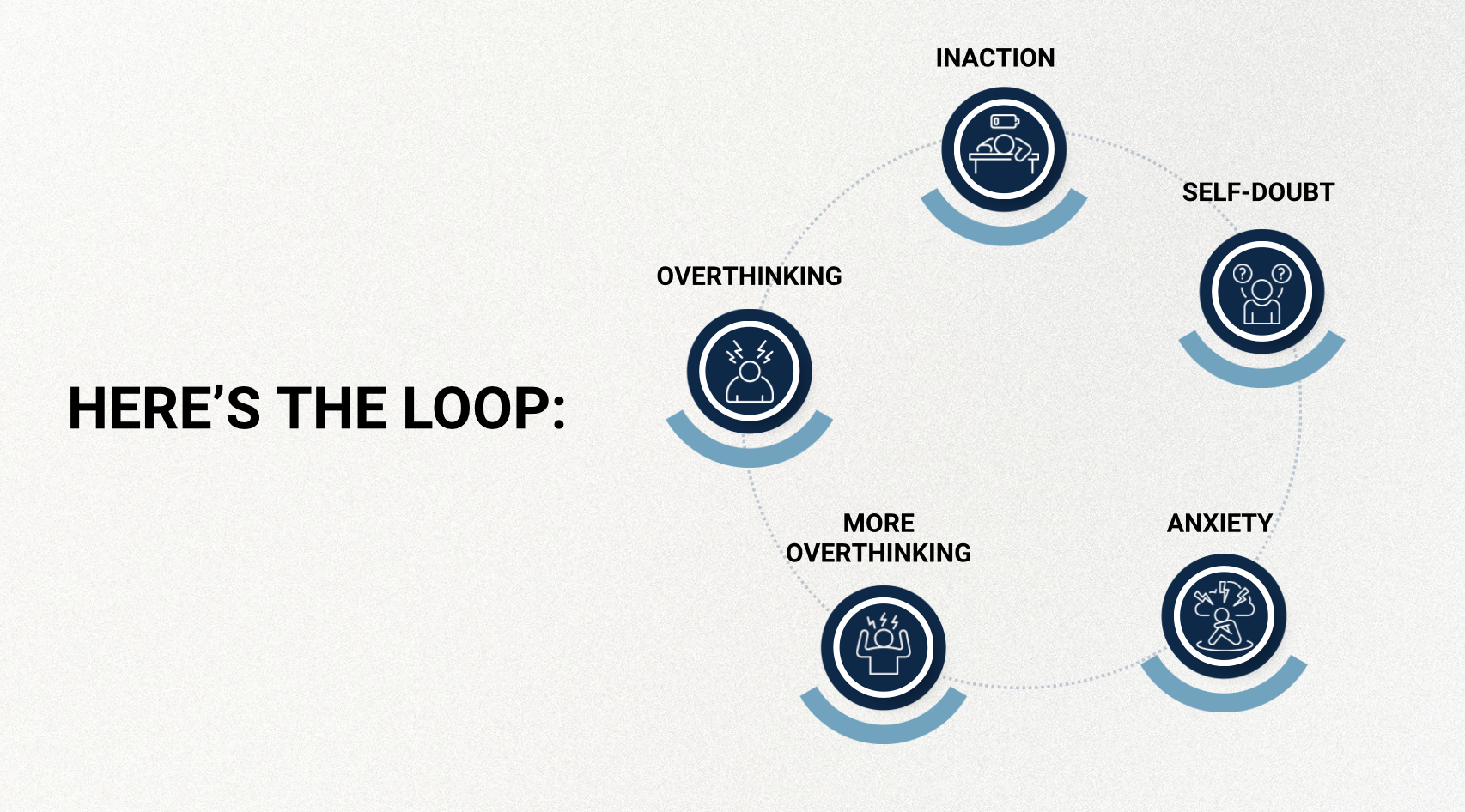
It’s not laziness. It’s the system doing what it was trained to do: avoid risk.
But risk is where movement starts.
A Better Way
The way out isn’t clarity.
It’s action. Especially the kind you’ve been avoiding.
Not in 90-day plans. Not in rebrands.
In ten quiet minutes.
One uncomfortable move, once a day.
I call it a 10-Minute Exit , because it’s how you exit the mental loop and enter the market.
Small actions done consistently shift identity faster than perfect plans ever will.
You don’t need a morning routine. You need a bias for action — tiny, repeatable, real.
Steps to Put It Into Practice
Part 1: Break the Loop with One Clear Move
Instruction: Name three things you’ve been avoiding.
Circle the one that makes your stomach tense.
Now shrink it until it’s almost laughable.
- Not “write a newsletter.” Just: Draft the subject line.
- Not “book a meeting.” Just: Find one name and draft the DM.
- Not “launch the offer.” Just: Write three bullet points about the problem you solve.
Set a timer. Ten minutes. That’s all.
Example: I once spent days trying to craft the perfect intro for a new service. Nothing felt right. On Day 5, I sent one message to an old client:
“Would this kind of offer solve something for you right now?”
He replied in ten minutes. Said yes.
That message unlocked €18,000. Not because it was genius — because it existed.
Part 2: Start with What You’ve Been Avoiding
Instruction: Use your 10 minutes to do the one thing your brain keeps postponing.
Not prep. Not polish. Something real — that moves you closer to a buyer.
Examples:
- Post 100 words about a problem you’ve solved
- DM one person with a specific insight or offer
- Ask a former peer: “What’s your team’s biggest headache this month?”
The goal is not to feel ready.
It’s to get real feedback from a real world that doesn’t live in your head.
Part 3: Design a Micro-Routine You’ll Actually Use
Instruction: Remove friction.
- Pin your action list
- Use a template for your messages
- Pair your courage block with something you already do: after coffee, after the gym, before email
Don’t wait for inspiration. Use automation to beat hesitation.
Example: I keep a folder called “10-Minute Exit.”
Inside: message templates, problem statements, offers.
Each morning, I open it, pick one, and act.
Then I close the tab. Walk away.
Some days, nothing happens.
Other days, it turns into a proposal.
Every day, I feel better — because I did the work.
Evidence or Experiment
I once coached a senior exec who spent five months preparing to “go solo.”
When he finally launched, it wasn’t a brand reveal.
It was one message a day for 14 days.
Ten real conversations. Three pilots. One retainers.
Revenue followed. But more importantly: Self-trust returned.
He didn’t find his voice. He used it. Until it got louder.
What This Means For You
- You’re not overthinking because you’re broken. You’re doing what your mind was trained to do: avoid risk.
- Clarity isn’t something you wait for. It’s something you earn through action and experience.
- The solution to stuck is rarely “more time.” It’s usually less hesitation.
- You don’t need to be brave all day. You need to be brave for ten minutes.
- The fastest way to rebuild momentum is to touch the market — once a day, every day.
Action Step for This Week
Pick one thing you’ve been avoiding. Since you are reading my Newsletter, I can imagine it might be about starting something by your own. Isn’t it?
So, what’s next?
Block ten minutes.
Do it.
Then track what happens.
Seven days.
Ten minutes a day.
You’ll see the loop weaken.
You’ll feel the shift.
That’s what I felt when I thought about my first own company I started as a solopreneur.
The magic you’re searching for?
It’s inside the message you’ve been avoiding.
And you’re only ten minutes away from sending it.
PS
What’s the one move you’ve been avoiding lately?
Hit reply and tell me.
If this helped, forward it to someone who’s editing a Canva template for the third time instead of sending the message that actually matters.
The future isn't waiting — why should you?
To your transformation.


Responses